How Do You Know If Your Fascia Board Needs to Be Replaced?
Your home’s fascia boards are easy to overlook until something goes wrong.
Located along the edge of the roof, fascia helps protect the roofline while providing an attachment point for many gutter systems. Because it’s exposed to Minnesota’s rain, snow, ice, wind, and temperature changes, fascia can eventually deteriorate.
But how do you know whether your fascia needs a minor repair or should actually be replaced?
Several warning signs can help homeowners recognize a potential problem.
1. Your Fascia Is Rotting or Feels Soft
Rot is one of the clearest indications that wood fascia may need attention.
Healthy wood should be firm. Fascia that has experienced prolonged moisture exposure can become soft, flaky, cracked, or deteriorated.
Rot can begin in a relatively small area and spread as moisture continues reaching the wood.
Common moisture sources include:
- Overflowing gutters
- Water getting behind gutters
- Roof-edge leaks
- Damaged flashing
- Ice buildup
- Improper drainage
Replacing rotten wood without correcting the water source may only temporarily solve the problem.
2. The Paint Is Peeling or Bubbling
A little faded paint doesn’t necessarily mean your fascia is failing.
However, widespread peeling, bubbling, or blistering can indicate repeated moisture exposure.
Pay particular attention if the damaged finish is accompanied by discoloration, cracks, or soft wood underneath.
Minnesota homes experience significant temperature changes throughout the year, so exterior finishes naturally age. The important question is whether you’re seeing ordinary cosmetic wear or evidence of a deeper moisture problem.
3. Your Gutters Are Sagging
Sagging gutters aren’t always caused by fascia damage, but they can be related.
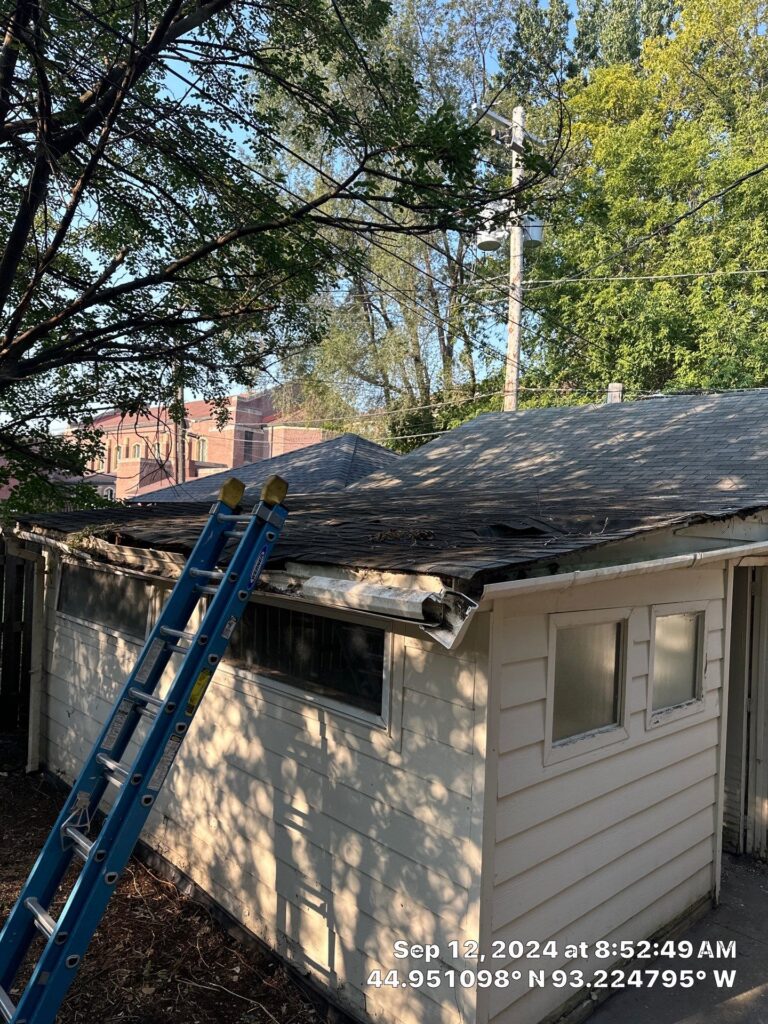
Many gutter systems are secured to the fascia. When that material deteriorates, fasteners may begin losing their grip.
You might see:
- A gap between the gutter and fascia
- Sections of gutter hanging lower than others
- Loose gutter fasteners
- Water running behind the gutter
- Gutters visibly pulling away from the house
A contractor should determine whether the gutter itself is failing, the fascia is damaged, or both need attention.
4. You See Water Stains Around the Roofline
Dark streaks or water stains around your fascia can be another warning sign.
Water should flow from the roof into the gutter and away from your home.
When water consistently runs over or behind a gutter, it can leave visible staining and expose the fascia to moisture.
Occasional staining doesn’t automatically mean replacement is necessary, but recurring moisture should be investigated.
5. There Are Cracks or Missing Sections
Visible physical damage is another reason to have fascia inspected.
Storms, falling branches, animals, aging materials, and previous exterior work can all damage the roofline.
A small crack may be repairable. Significant deterioration or missing sections could justify replacement.
The extent of the damage matters more than simply whether a crack exists.
6. You Notice Pest Activity
Damaged fascia can create vulnerable openings around the roofline.
Insects, birds, squirrels, and other pests may take advantage of gaps or deteriorated materials.
Homeowners should pay attention to scratching sounds, nests, visible holes, or repeated animal activity near the roof edge.
Repairing the exterior opening is important, but any active pest issue should also be handled appropriately.
Repair vs. Replacement: What’s the Difference?
Not every damaged fascia board needs complete replacement.
Repair may make sense when damage is minor and limited to a small area.
Replacement becomes more likely when the fascia is:
- Severely rotten
- Structurally weak
- Extensively cracked
- Unable to securely support gutters
- Damaged across multiple sections
- Repeatedly experiencing the same problem
A professional assessment is useful because visible damage may only represent part of the issue.